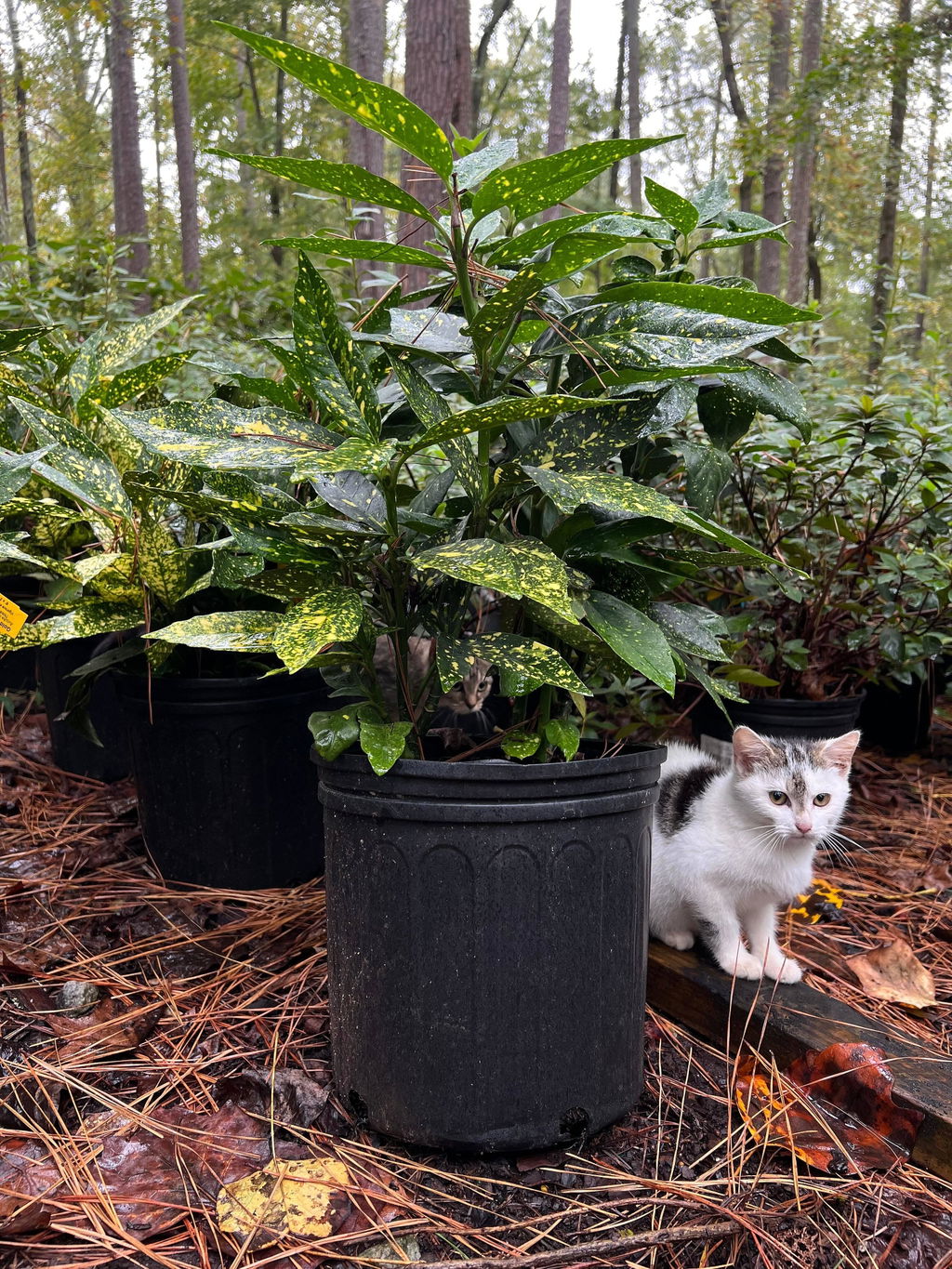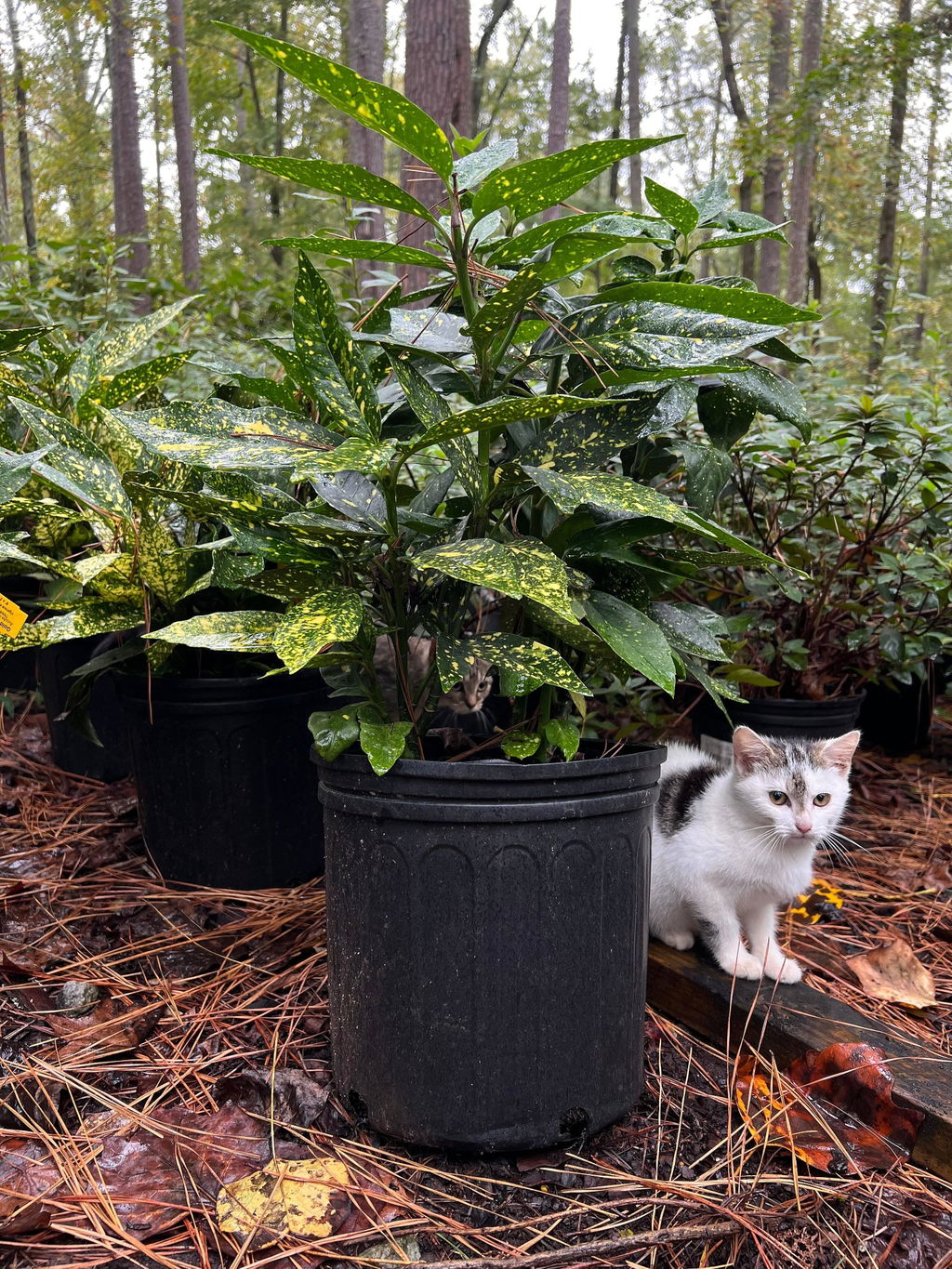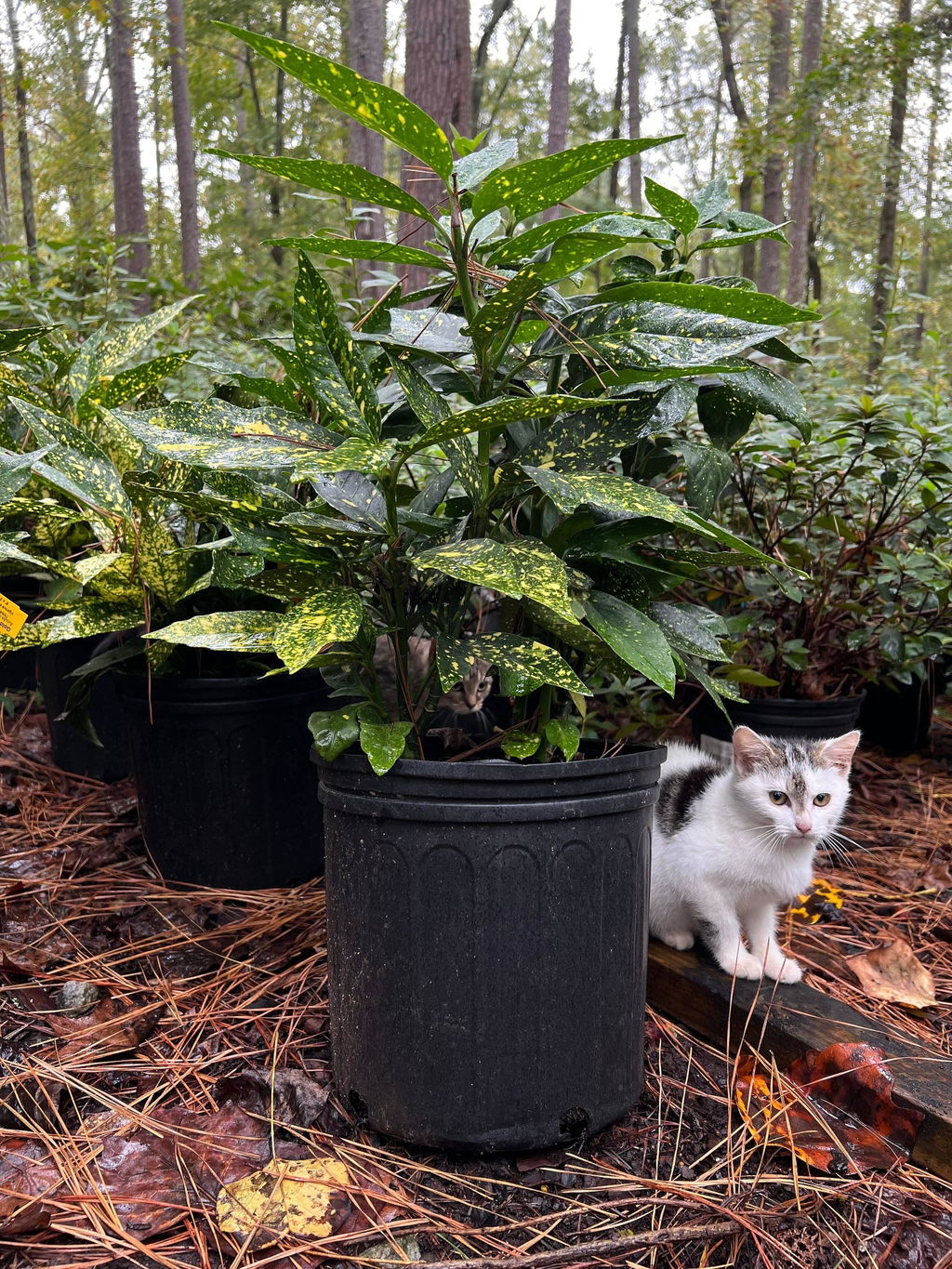



Gold Dust Aucuba Shrub
Aucuba japonica ‘Variegata’ (Gold Dust)
An attractive evergreen ornamental shrub with glossy green leaves splashed in gold, perfect for shade gardens, borders, and containers. A low-maintenance outdoor plant ideal for landscaping, hedges, and foundation planting.
- Regular price
-
$89.99 - Regular price
-
$185.70 - Sale price
-
$89.99
-
Hurry, only 5 items left in stock!

FREE 3-Month Plant Health Guarantee

Need help? Our plant experts are just an email away:[email protected]

Common Names
Shipping information
Shipping cost is based on weight. Just add products to your cart and use the Shipping Calculator to see the shipping price.
Ground shipping (3 - 5 days)
| Amount of Order | Shipping Amount |
| $0.00-$24.99 | $20.99 |
| $25.00-$49.99 | $30.99 |
| $50.00-$89.99 | $36.99 |
| $90.00-$98.99 | $46.99 |
| $99.00 & above | Free |
*Shipping offers are only valid for Ground shipping
Expedited Shipping
| Amount of Order |
Shipping Amount (2-3 Days)
|
Shipping Amount (1-2 Days) |
| $0.00-$24.99 | $29.99 | $69.99 |
| $25.00-$49.99 | $39.99 | $89.99 |
| $50.00-$99.99 | $49.99 | $99.99 |
| $100.00-$149.99 | $59.99 | $129.99 |
| $150.00-$249.99 | $74.99 | $149.99 |
| $250.00-$349.99 | $94.99 | $249.99 |
| $350.00-$499.99 | $124.99 | $299.99 |
| $500.00-$699.99 | $149.99 | $499.99 |
| $700.00-$999.99 | $199.99 | $799.99 |
| $1000.00-$1499.99 | $249.99 | $999.99 |
| $1500.00-$1999.99 | $299.99 | $1,499.99 |
| $2000.00-$2499.99 | $349.99 | $1,999.99 |
| $2500.00-$3000.00 | $399.99 | $2,999.99 |
*Shipping offers will not be valid for Expedited 2 to 3 days & 1 to 2 days shipping.
*For 13 states, The Expedited Shipping will be 3-4 days and Ground Shipping will be 4-6 days and the shipping price will be higher with 10$ + 5%.
13 States are : Arizona, California, Idaho, Montana, Nevada, Oregon, Utah, Washington, Wyoming, New Mexico, North and South Dakota, Nebraska
Returns policy
We hope you to love it, but if you need to make a return, breathe easy. Returns are always free and can be done in person or by mail.
Pixies Garden takes pride in delivering healthy, nursery-grown plants with careful packaging. Because live plants are perishable, all return and refund requests are strictly limited and assessed on a case-by-case basis.
1. Return & Refund Policy
Pixies Garden takes pride in providing healthy, nursery-grown plants that are carefully packaged. Due to the perishable nature of live plants, return and refund requests are strictly limited and reviewed on a case-by-case basis.
-
Returns are not accepted for healthy, correctly fulfilled plants.
-
If a return is requested for personal reasons (e.g., change of mind, size concerns), it may be approved only at Pixies Garden's sole discretion.
-
If approved, a partial refund will be issued after deducting:
-
20% restocking fee
-
Original shipping charges
-
Return shipping cost (paid by the customer)
-
To be eligible:
-
Request must be submitted within 7 days of delivery
-
Include:
-
Clear photographic evidence of the issue
-
Proof of proper care and handling from delivery onward
-
-
Plants must:
-
Remain in original containers
-
Show no signs of neglect or mishandling
-
Live Arrival Guarantee applies only if:
-
The package is opened on the same day of delivery
-
No return or refund will be granted for post-delivery care issues
2. Return Authorization Required
-
A Return Authorization Number (RAN) must be obtained before returning any item.
-
Returns without an RAN will be automatically rejected.
-
The RAN must be:
-
Clearly marked on the outside of the return box
-
Included on the packing slip inside the package
-
3. Return Shipping
-
Customers are responsible for all return shipping costs.
-
Pixies Garden can provide a pre-paid FedEx label upon request, billed at a flat rate based on our discounted rates.
4. Refund Terms
Refunds are only issued if:
-
The wrong plant was delivered
-
The plant arrived dead or severely damaged (with photographic proof)
Refunds are not issued for:
-
Healthy or correctly delivered plants
If approved:
-
Only the plant value will be refunded
-
Shipping and handling charges are non-refundable
-
Processing time is up to 14 business days
-
Refunds are issued to the original payment method only
5. Ineligible Return Conditions
-
Nursery visit and local pickup purchases are final sale
-
These orders are not covered under our shipping return policy
6. Policy Enforcement
-
Pixies Garden reserves the right to deny any return or refund request at its sole discretion
-
No obligation to provide further explanation
-
Repeated abuse of this policy may result in blacklisting from future purchases
7. Contact Us
If you have questions regarding returns, refunds, or your order:
Email: [email protected]
Business Hours: Monday to Friday, 10 AM – 7 PM EST
Check Delivery:


Product Info
Description
Zones

Plant Care Tips
Local search
Customer Service
Pixies Gardens
2024 Mcdaniel Mill Road Conyers GA 30094
Email: [email protected]