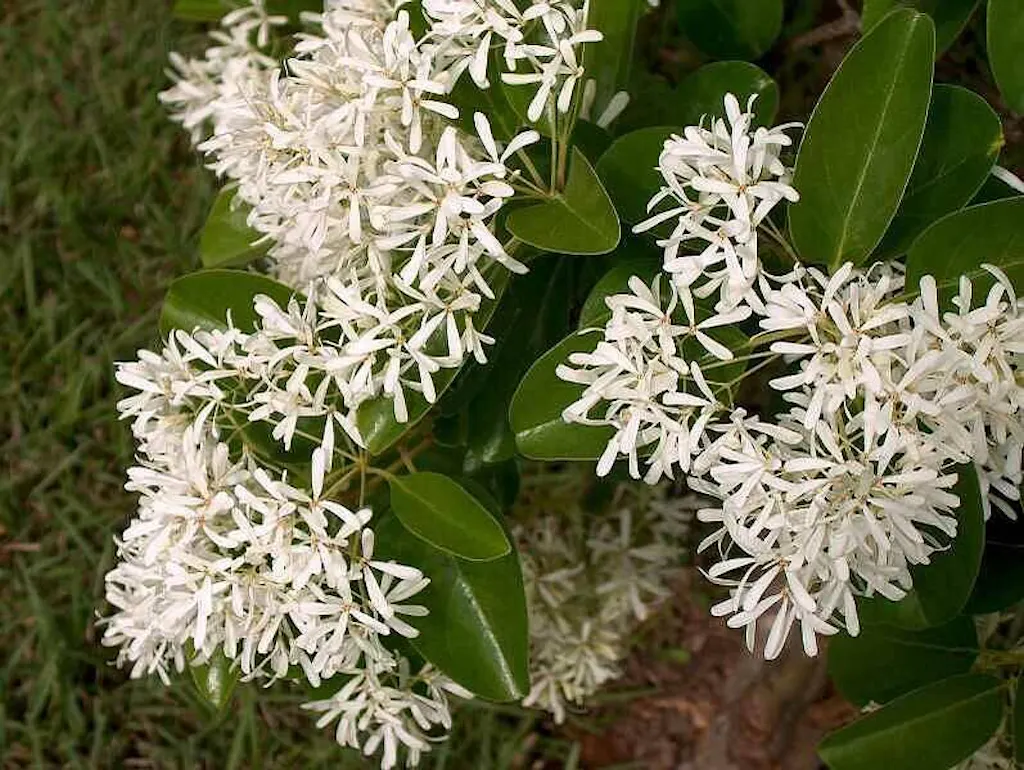



Chinese Fringe Tree Flowering Tree
Chionanthus retusus
The Chinese Fringe Tree is a unique small flowering tree admired for its cascading white, fragrant flowers in spring. It also has an attractive round form. Ideal for home landscapes, patios, and focal plantings, it offers elegance, seasonal beauty, and low-maintenance growth.
- Regular price
-
$288.99 - Regular price
-
$271.41 - Sale price
-
$288.99
-
Hurry, only 5 items left in stock!

FREE 3-Month Plant Health Guarantee

Need help? Our plant experts are just an email away:[email protected]

Common Names
Shipping information
Shipping cost is based on weight. Just add products to your cart and use the Shipping Calculator to see the shipping price.
Ground shipping (3 - 5 days)
| Amount of Order | Shipping Amount |
| $0.00-$24.99 | $20.99 |
| $25.00-$49.99 | $30.99 |
| $50.00-$89.99 | $36.99 |
| $90.00-$98.99 | $46.99 |
| $99.00 & above | Free |
*Shipping offers are only valid for Ground shipping
Expedited Shipping
| Amount of Order |
Shipping Amount (2-3 Days)
|
Shipping Amount (1-2 Days) |
| $0.00-$24.99 | $29.99 | $69.99 |
| $25.00-$49.99 | $39.99 | $89.99 |
| $50.00-$99.99 | $49.99 | $99.99 |
| $100.00-$149.99 | $59.99 | $129.99 |
| $150.00-$249.99 | $74.99 | $149.99 |
| $250.00-$349.99 | $94.99 | $249.99 |
| $350.00-$499.99 | $124.99 | $299.99 |
| $500.00-$699.99 | $149.99 | $499.99 |
| $700.00-$999.99 | $199.99 | $799.99 |
| $1000.00-$1499.99 | $249.99 | $999.99 |
| $1500.00-$1999.99 | $299.99 | $1,499.99 |
| $2000.00-$2499.99 | $349.99 | $1,999.99 |
| $2500.00-$3000.00 | $399.99 | $2,999.99 |
*Shipping offers will not be valid for Expedited 2 to 3 days & 1 to 2 days shipping.
*For 13 states, The Expedited Shipping will be 3-4 days and Ground Shipping will be 4-6 days and the shipping price will be higher with 10$ + 5%.
13 States are : Arizona, California, Idaho, Montana, Nevada, Oregon, Utah, Washington, Wyoming, New Mexico, North and South Dakota, Nebraska
Returns policy
We hope you to love it, but if you need to make a return, breathe easy. Returns are always free and can be done in person or by mail.
Pixies Garden takes pride in delivering healthy, nursery-grown plants with careful packaging. Because live plants are perishable, all return and refund requests are strictly limited and assessed on a case-by-case basis.
1. Return & Refund Policy
Pixies Garden takes pride in providing healthy, nursery-grown plants that are carefully packaged. Due to the perishable nature of live plants, return and refund requests are strictly limited and reviewed on a case-by-case basis.
-
Returns are not accepted for healthy, correctly fulfilled plants.
-
If a return is requested for personal reasons (e.g., change of mind, size concerns), it may be approved only at Pixies Garden's sole discretion.
-
If approved, a partial refund will be issued after deducting:
-
20% restocking fee
-
Original shipping charges
-
Return shipping cost (paid by the customer)
-
To be eligible:
-
Request must be submitted within 7 days of delivery
-
Include:
-
Clear photographic evidence of the issue
-
Proof of proper care and handling from delivery onward
-
-
Plants must:
-
Remain in original containers
-
Show no signs of neglect or mishandling
-
Live Arrival Guarantee applies only if:
-
The package is opened on the same day of delivery
-
No return or refund will be granted for post-delivery care issues
2. Return Authorization Required
-
A Return Authorization Number (RAN) must be obtained before returning any item.
-
Returns without an RAN will be automatically rejected.
-
The RAN must be:
-
Clearly marked on the outside of the return box
-
Included on the packing slip inside the package
-
3. Return Shipping
-
Customers are responsible for all return shipping costs.
-
Pixies Garden can provide a pre-paid FedEx label upon request, billed at a flat rate based on our discounted rates.
4. Refund Terms
Refunds are only issued if:
-
The wrong plant was delivered
-
The plant arrived dead or severely damaged (with photographic proof)
Refunds are not issued for:
-
Healthy or correctly delivered plants
If approved:
-
Only the plant value will be refunded
-
Shipping and handling charges are non-refundable
-
Processing time is up to 14 business days
-
Refunds are issued to the original payment method only
5. Ineligible Return Conditions
-
Nursery visit and local pickup purchases are final sale
-
These orders are not covered under our shipping return policy
6. Policy Enforcement
-
Pixies Garden reserves the right to deny any return or refund request at its sole discretion
-
No obligation to provide further explanation
-
Repeated abuse of this policy may result in blacklisting from future purchases
7. Contact Us
If you have questions regarding returns, refunds, or your order:
Email: [email protected]
Business Hours: Monday to Friday, 10 AM – 7 PM EST
Check Delivery:


Product Info
Description
Zones

Plant Care Tips
Local search
Customer Service
Pixies Gardens
2024 Mcdaniel Mill Road Conyers GA 30094
Email: [email protected]